.png)
Every year around this time, people start asking about getting in shape for summer. They want to lose a few pounds, tighten things up, and feel more confident when they head to the beach, the pool, or on vacation.
The reality is pretty simple. If you want different results, you have to do something different. The same habits that got you where you are today will generally keep you where you are tomorrow. That's not a bad thing, it's just reality. If your goal is to lose body fat, improve muscle definition, and feel better over the next six weeks, then for the next six weeks your habits need to change.
One of the biggest mistakes I see people make is confusing motivation with consistency. They get fired up, start working out every day, eat perfectly for a week or two, and then life happens. Work gets busy, the kids have activities, a vacation comes up, or they simply have a bad week. Suddenly the workouts stop, the diet goes out the window, and they feel like they're starting over.
The truth is, your Summer Shred doesn't end when you go on vacation. It ends when you decide not to come back.
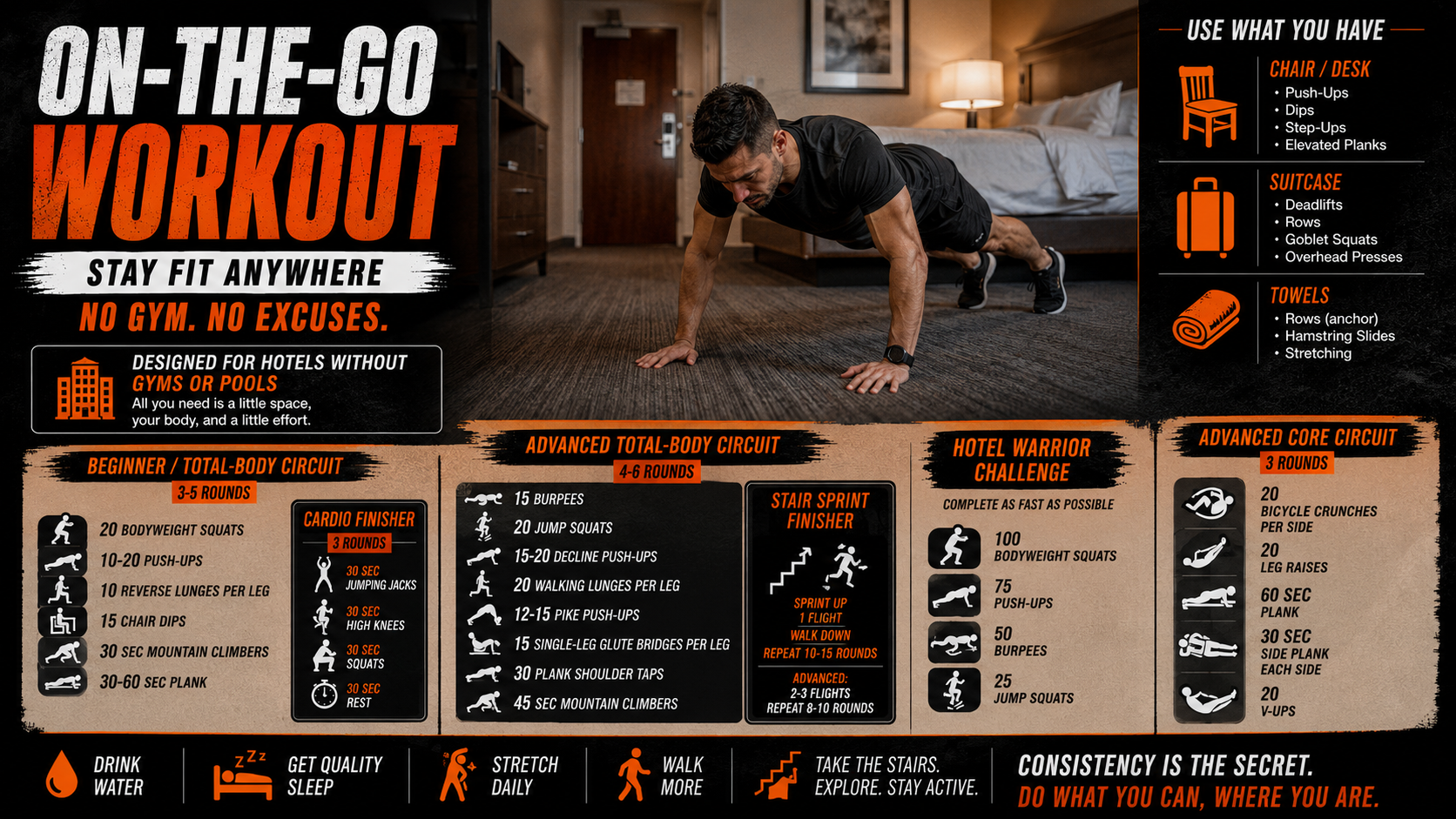
Vacations are fine. Family cookouts are fine. Birthdays are fine. Life is supposed to be enjoyed. The key is having a plan before those things happen. When you're home, commit to training four or five days per week. When you're traveling, switch into maintenance mode. Take walks. Use the hotel gym. Knock out some bodyweight exercises in your room. Stay active.
The goal isn't perfection. The goal is consistency.
The people who get the best results aren't usually the people who work the hardest for a week. They're the people who keep showing up for six weeks straight.
In fact, one of the most important decisions you can make is deciding ahead of time what your commitment level is going to be. Don't wait until you're tired, stressed, or unmotivated to decide whether you're going to work out. Make that decision now. Commit to the process before motivation fades because motivation always fades. Discipline is what gets results.
Now let's talk about the biggest factor in any Summer Shred program: your diet.
I know everyone wants the perfect workout routine, but the truth is you simply cannot out-train a bad diet. I've seen people spend an hour doing cardio only to erase that calorie deficit with one poor meal on the way home. If your nutrition isn't under control, your results will always be limited.
That doesn't mean you have to eat perfectly. In fact, trying to be perfect usually backfires. What works is having a plan. If you're going out to dinner, plan for it. If you're attending a family cookout, plan for it. If you're going to enjoy dessert on vacation, enjoy it. Then get right back on track with your next meal.
One meal won't ruin your progress, but a week of poor decisions absolutely can.
Another thing people overlook is recovery. Everyone wants to talk about workouts and supplements, but very few people want to talk about sleep. The reality is that your body recovers while you sleep. Your muscles recover while you sleep. Your hormones recover while you sleep. If you're serious about improving your results, start by getting at least six hours of sleep every night and aim for eight whenever possible. You'll be amazed how much easier fat loss becomes when you're properly rested.
The same goes for stretching. It's not exciting, and it probably won't get any likes on social media, but stretching every day can make a huge difference during a Summer Shred. As training volume increases, so does your risk of injury. Five or ten minutes of stretching each day can help you move better, recover better, and avoid the nagging aches and pains that often derail progress halfway through a program.
Hydration is another simple habit that produces surprisingly big results. Most people walk around mildly dehydrated and don't even realize it. For most active adults, I recommend getting close to a gallon of water each day. Better hydration can improve recovery, improve workout performance, reduce water retention, and help control hunger. It's one of the easiest changes you can make and one of the most effective.
Let's talk about cardio for a minute.
Over the last several years, cardio has almost become the villain in the fitness world. People love to debate whether cardio is necessary or whether lifting weights alone is enough. The truth, as usual, is somewhere in the middle.
If your goal is maximizing fat loss over a short six-week period, cardio absolutely helps.
No, you don't need to spend two hours a day running on a treadmill. In fact, for most people that's unnecessary and probably not sustainable. What you do need is a consistent increase in activity that burns calories and improves conditioning.
Walking is great. Incline treadmills are great. Boxing, kickboxing, rowing, cycling, and group fitness classes are all excellent options. The specific form of cardio matters far less than your ability to do it consistently.
For most people, I'd recommend 30-45 minutes of cardio four to six days per week during a Summer Shred. Some of that can come from your regular workouts, some can come from walking after dinner, and some can come from dedicated cardio sessions.
Remember, the goal isn't becoming a marathon runner. The goal is increasing your daily calorie expenditure while improving your overall fitness.
One of the biggest mistakes people make during a fat-loss phase is focusing entirely on losing weight.
Weight loss is only part of the equation.
What most people really want is to lose fat while keeping or building muscle. That's what creates the leaner, more athletic look that people are usually after.
If you only diet and do endless cardio, you'll lose weight. Unfortunately, some of that weight may come from muscle tissue. Strength training helps preserve muscle while your body is burning fat.
That's why every good Summer Shred program should include resistance training.
You don't need a complicated bodybuilding routine. You don't need to spend three hours in the gym. You simply need a well-structured program performed consistently.
For most people, an upper/lower split works extremely well because it allows you to train frequently while giving muscle groups enough time to recover.
Perform 3-4 sets of each exercise using a weight that challenges you while allowing proper form.
Finish with 15-20 minutes of moderate cardio such as incline treadmill walking, cycling, rowing, or the heavy bag.
Perform 3-4 sets of each exercise.
Finish with 15-20 minutes of incline walking, stair climbing, or another moderate cardio option.
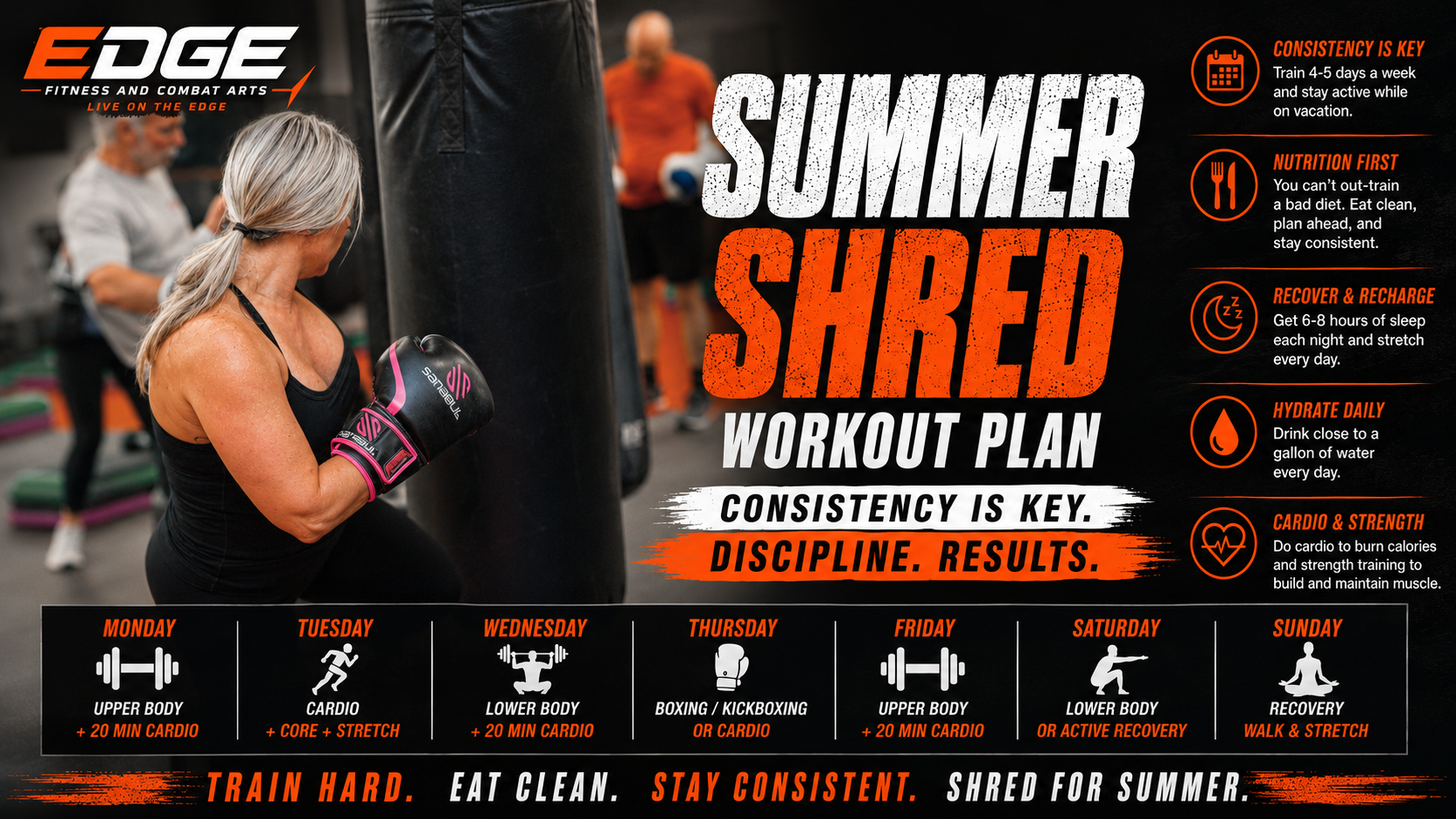
One of the biggest questions I get is, "What should my week actually look like?"
Here's a simple example that works well for most people.
Upper Body Workout + 20 Minutes Cardio
45 Minutes Cardio + Core Training + Stretching
Lower Body Workout + 20 Minutes Cardio
Boxing, Kickboxing, Group Fitness Class, or 45 Minutes of Cardio
Upper Body Workout + 20 Minutes Cardio
Lower Body Workout or Active Recovery
Recovery Day, Walking, and Stretching
Now before someone reads that schedule and thinks they have to be perfect, let me remind you of something.
The goal isn't to follow this schedule perfectly.
The goal is to be consistent.
If you miss a workout, don't quit.
If you have a bad meal, don't quit.
If you go on vacation, don't quit.
Just get back on track as quickly as possible.
At the end of the day, a Summer Shred isn't really about a workout program or even a diet plan.
It's about creating a period of focused effort.
For six weeks, train with purpose. Eat with intention. Get your sleep. Drink your water. Stretch every day. Stay active even when life gets busy.
Most importantly, remember that consistency beats intensity every single time.
Anyone can be motivated for a few days.
The people who get the best results aren't the most talented. They aren't the most motivated. They're the ones who keep showing up when motivation fades.
Do that for six weeks and you'll be surprised by what you can accomplish before summer is over.
See you in the gym.

.png)